
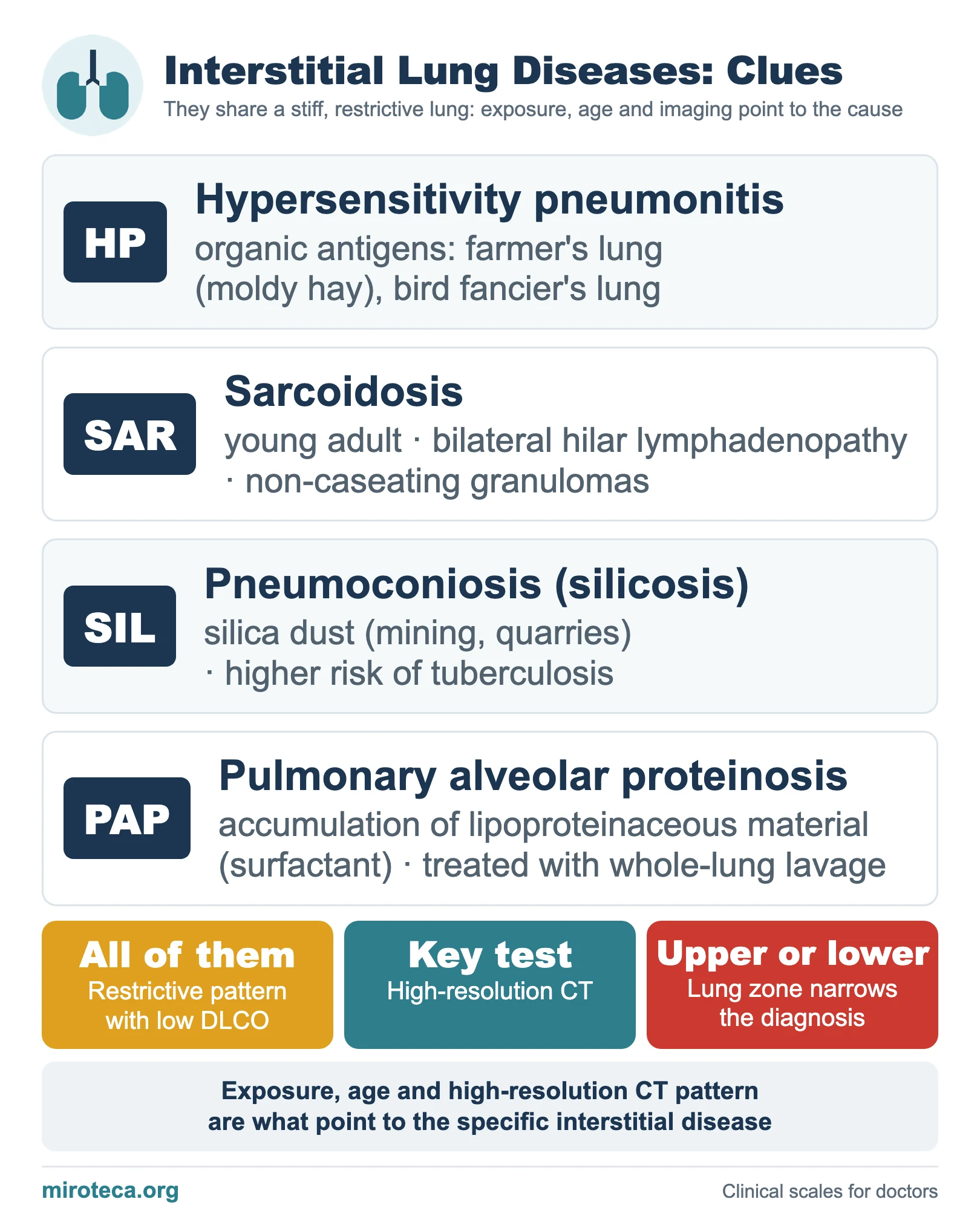
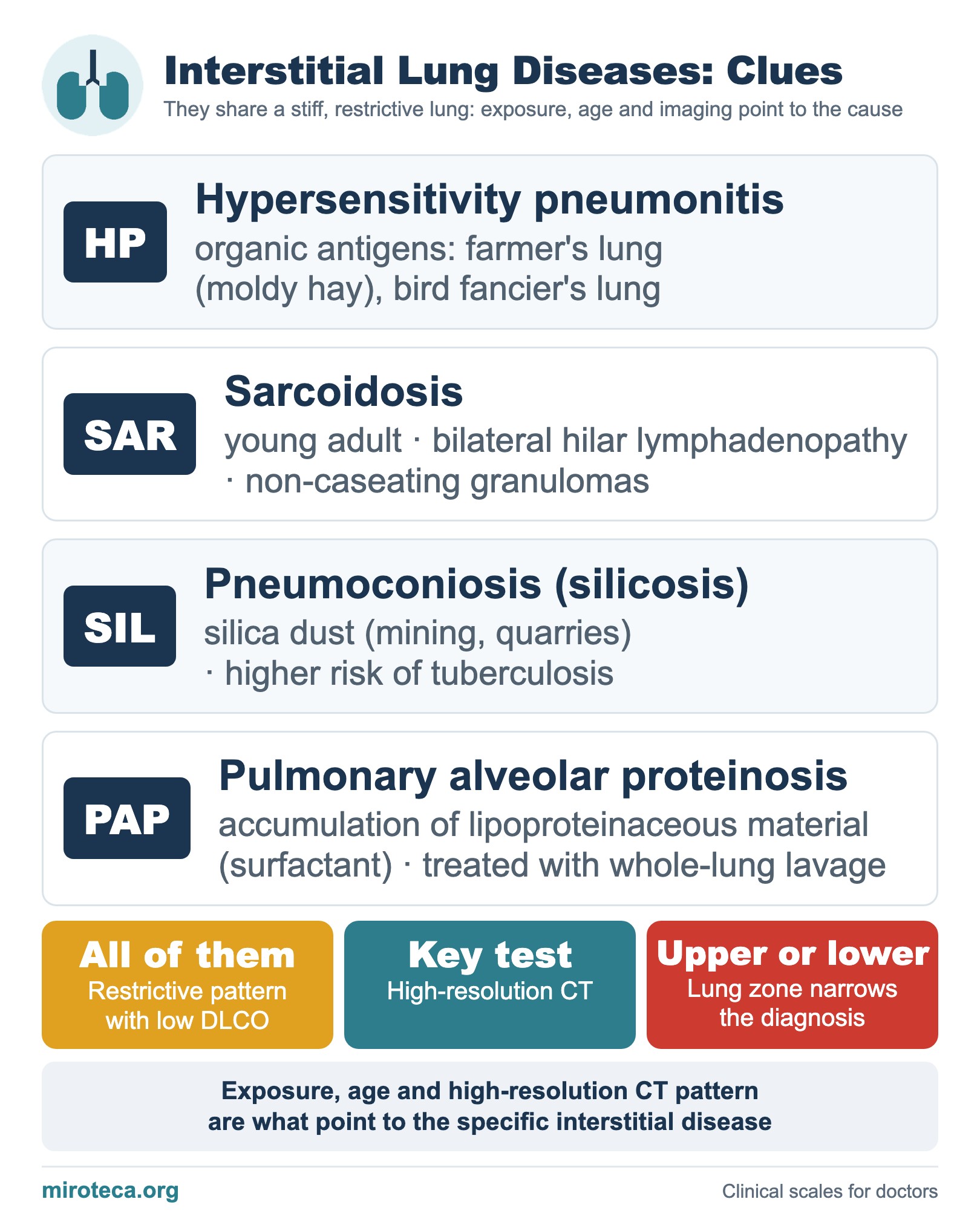
What the chart shows
Interstitial lung diseases share a "stiff" lung (restrictive pattern with low DLCO), so the key to getting them right lies in the patient context: exposure, age and imaging.
Associations to recognize
Exposure to birds or moldy hay: hypersensitivity pneumonitis (farmer's lung or bird fancier's lung). Bilateral hilar lymphadenopathy in a young adult with non-caseating granulomas: sarcoidosis. Mining or quarries (silica): silicosis, which also raises the risk of tuberculosis. Lipoproteinaceous alveolar material treated with whole-lung lavage: alveolar proteinosis.
High-resolution CT is the key test to define the pattern; predominance in the upper or lower lung zones narrows the diagnosis a lot. See UIP vs NSIP and obstructive vs restrictive spirometry.
In exam questions
Short rules: exposure to birds or hay means hypersensitivity pneumonitis; bilateral hilar lymphadenopathy in a young adult means sarcoidosis; high-resolution CT is key for the interstitial pattern.
Keep practicing
This page is the visual summary. To test yourself with real clinical reasoning, Medicinedle, a Wordle-inspired game, gives you one clinical case a day: guess the diagnosis in six tries, with a new clue after every miss. It is free.
Prefer quick questions? The clinical scores quiz gives you 5 case-based questions in about a minute, with the answer explained.