
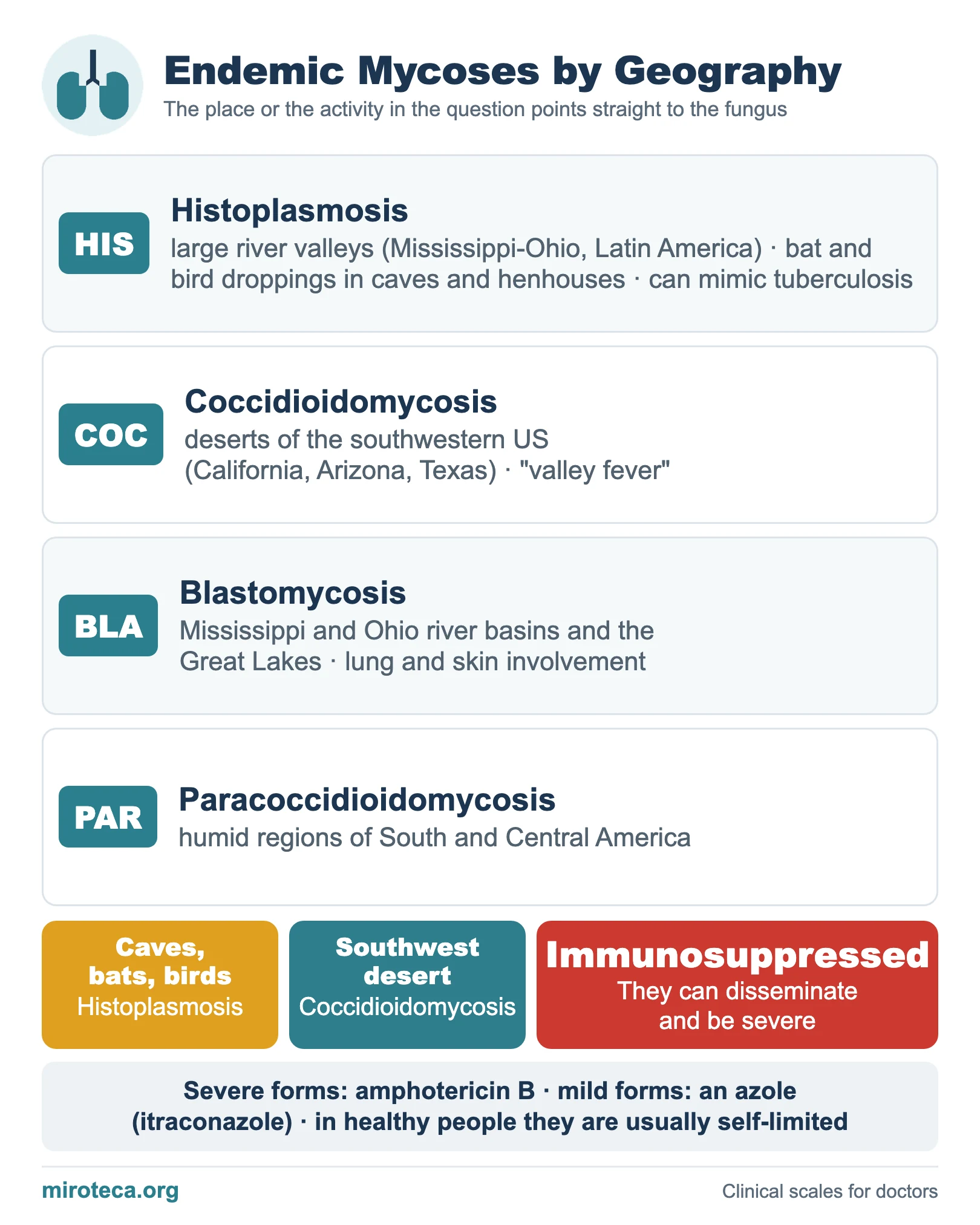
What the chart shows
The endemic systemic mycoses have a specific geographic distribution, and the place usually gives the diagnosis. The question often describes an activity (exploring caves, working in the desert) that points straight to the fungus.
Each fungus on its ground
Histoplasma: Mississippi-Ohio valleys, caves and henhouses (bat and bird droppings); it can mimic tuberculosis. Coccidioides: deserts of the southwestern US (California, Arizona), "valley fever". Blastomyces: the Great Lakes and river basins, with lung and skin involvement. Paracoccidioides: humid areas of Latin America.
A high-yield nuance: in immunosuppressed patients (HIV, transplant recipients) these mycoses can disseminate and be severe, while in healthy people they are usually self-limited. Severe forms are treated with amphotericin B, and mild ones with an azole (itraconazole).
In exam questions
Short rules: caves or bats mean histoplasmosis; the southwestern US desert means coccidioidomycosis; the travel or geographic history is the key clue.
Keep practicing
This page is the visual summary. To test yourself with real clinical reasoning, Medicinedle, a Wordle-inspired game, gives you one clinical case a day: guess the diagnosis in six tries, with a new clue after every miss. It is free.
Prefer quick questions? The clinical scores quiz gives you 5 case-based questions in about a minute, with the answer explained.