
What the chart shows
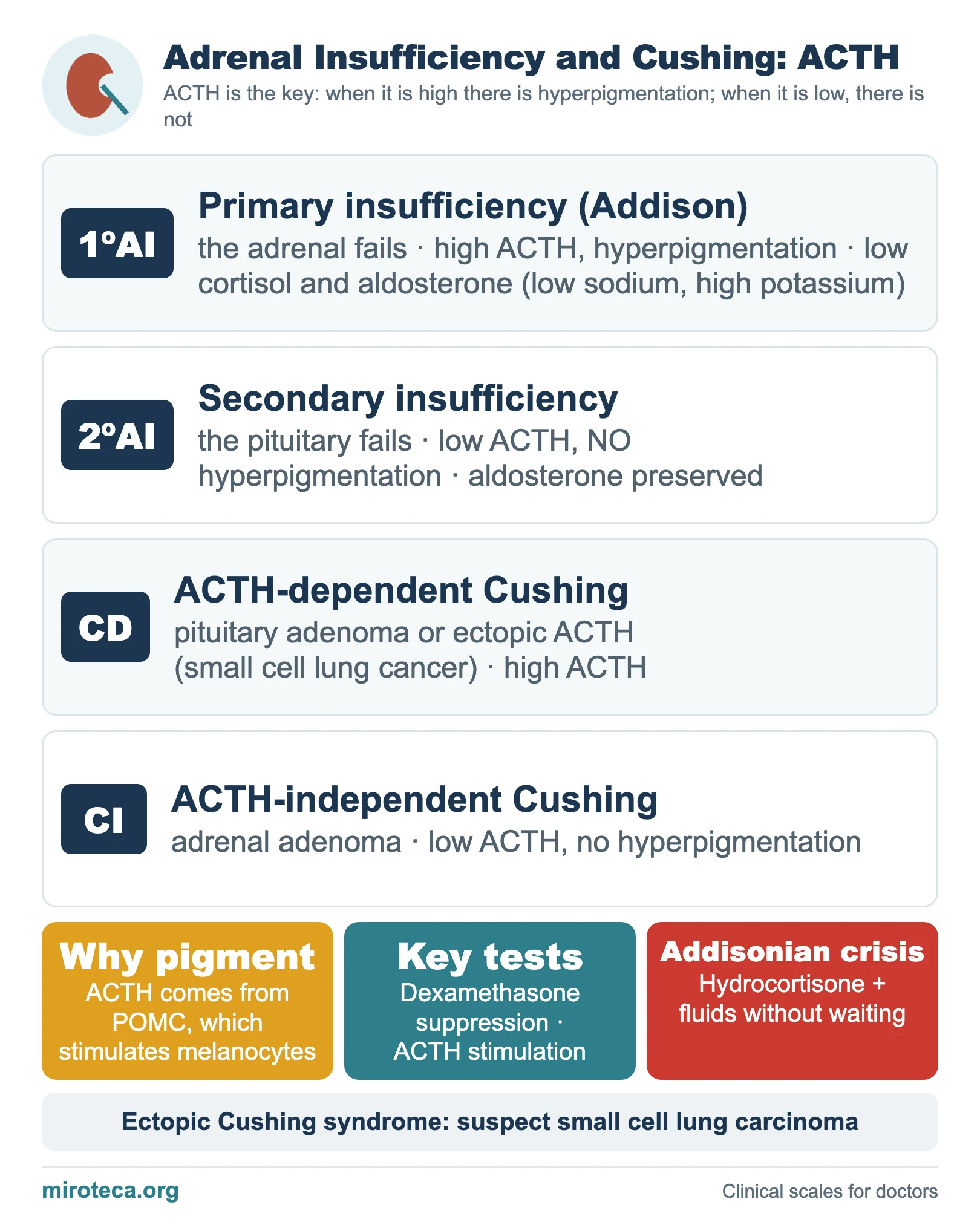
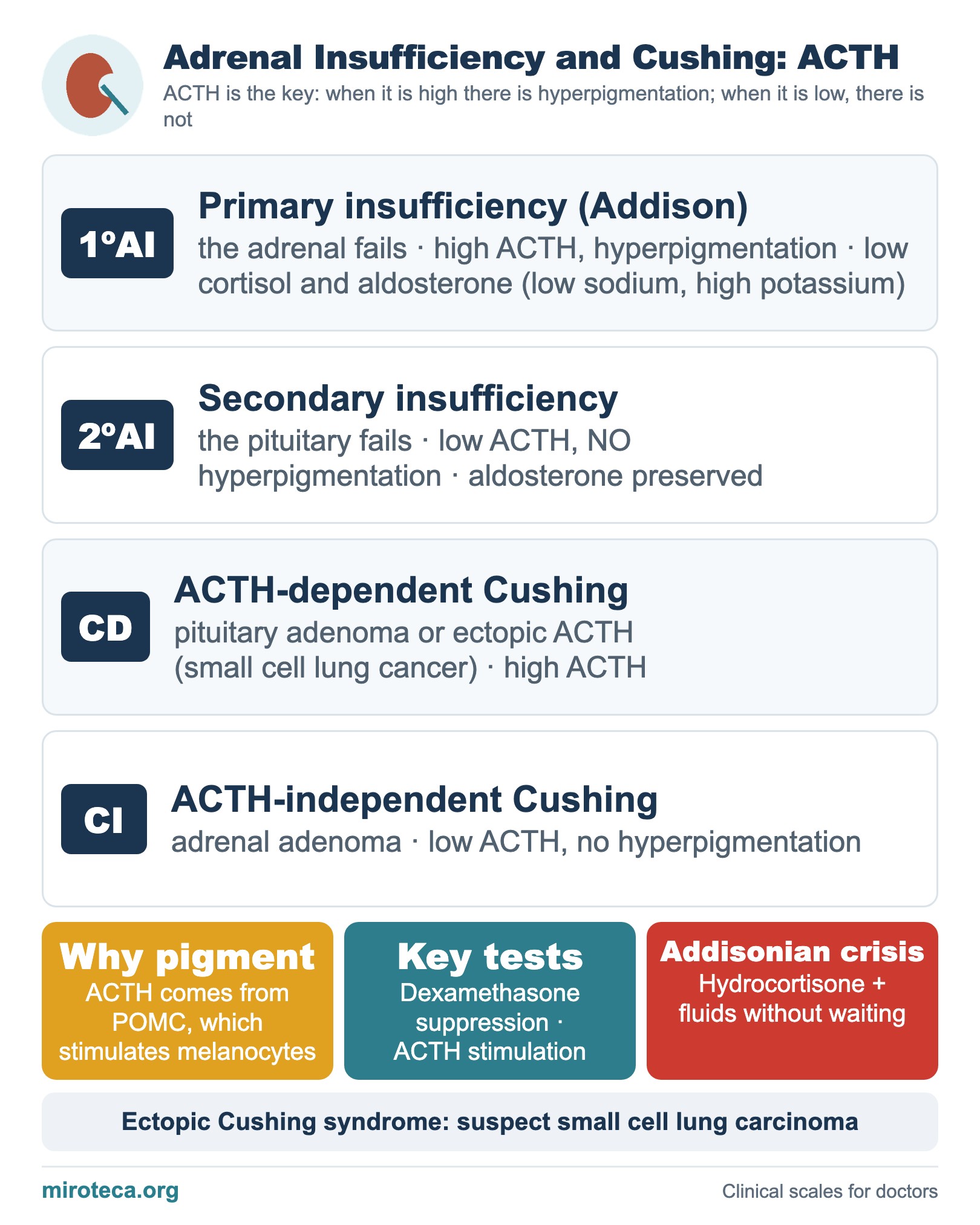
The whole topic is ordered by one question: is ACTH high or low? When it is high there is hyperpigmentation (ACTH comes from POMC, which stimulates melanocytes); when it is low, there is not.
How to locate the problem
Addison (primary): the gland fails, so ACTH is high, with hyperpigmentation and low cortisol and aldosterone (low sodium plus high potassium). Secondary insufficiency: the pituitary fails, so ACTH is low, without hyperpigmentation and with preserved aldosterone (that is why there is no high potassium). ACTH-dependent Cushing: pituitary adenoma (Cushing disease) or ectopic ACTH (small cell lung cancer). ACTH-independent Cushing: adrenal adenoma, with low ACTH.
Key tests: dexamethasone suppression for Cushing and the ACTH stimulation test for insufficiency. An addisonian crisis is an emergency: hydrocortisone and fluids without waiting for confirmation. See also adrenal disorders at a glance.
In exam questions
Short rules: high ACTH means hyperpigmentation, low ACTH means none; Addison gives low sodium and high potassium from lack of aldosterone; ectopic Cushing suggests small cell lung carcinoma.
Keep practicing
This page is the visual summary. To test yourself with real clinical reasoning, Medicinedle, a Wordle-inspired game, gives you one clinical case a day: guess the diagnosis in six tries, with a new clue after every miss. It is free.
Prefer quick questions? The clinical scores quiz gives you 5 case-based questions in about a minute, with the answer explained.