
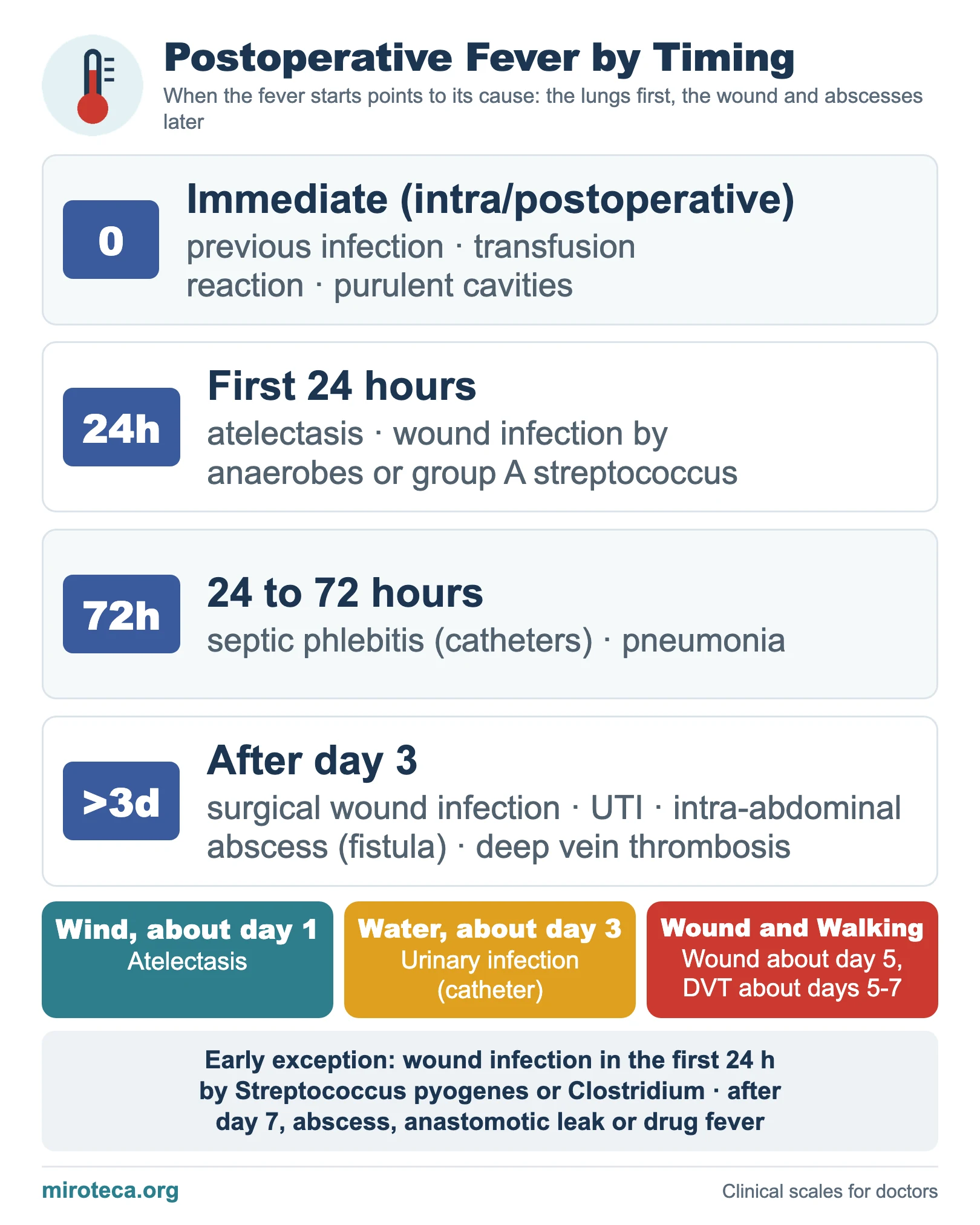
What the chart shows
The moment when fever appears after surgery points to its cause. It is the classic rule of the postoperative "Ws", and the timeline is exactly what exam questions ask.
Each fever on its day
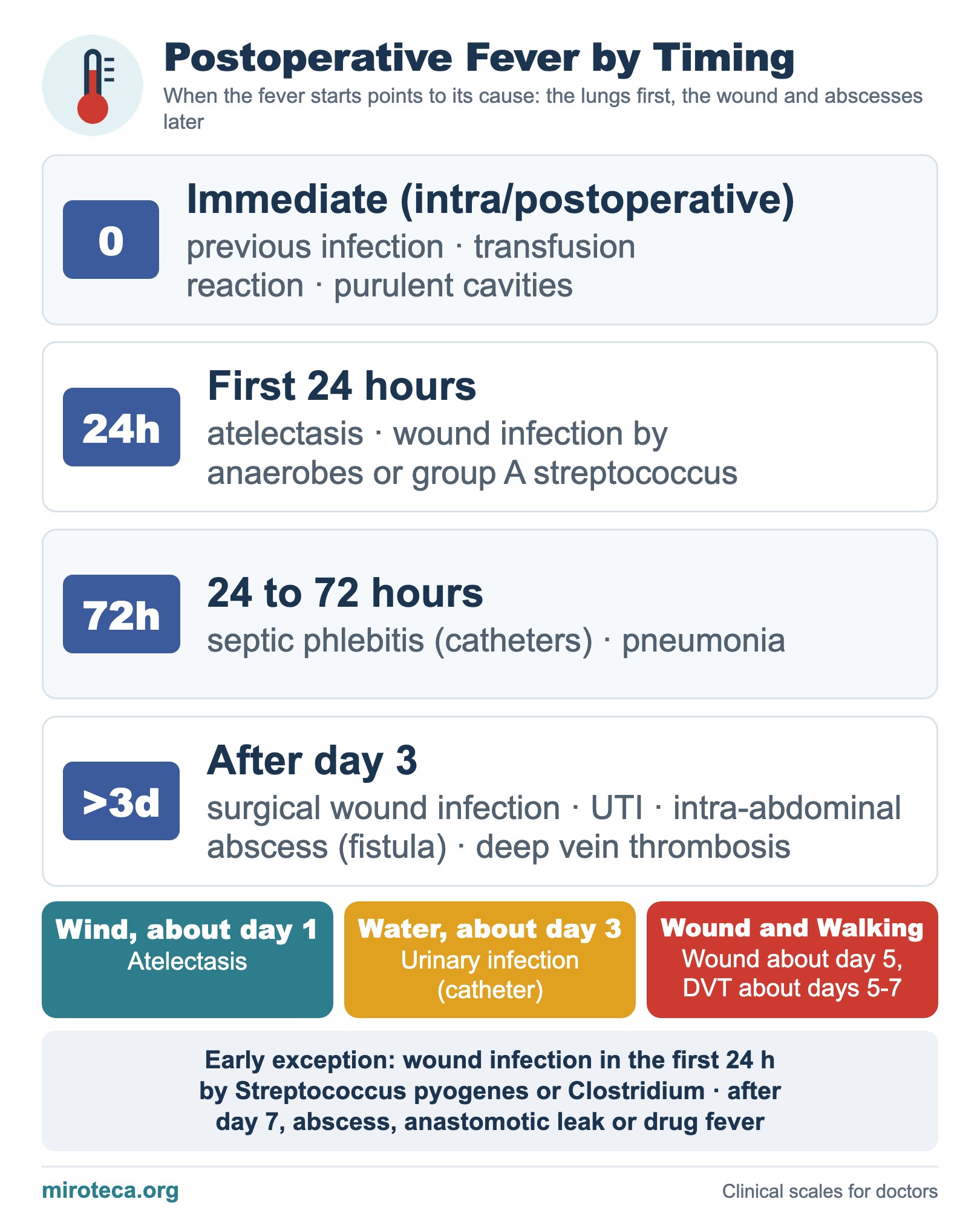
Wind (lungs, about 24 h): atelectasis, the most frequent cause of very early fever. Water (about day 3): urinary infection, above all after a urinary catheter. Wound (about day 5): surgical wound infection; earlier, at 24-72 h, catheter phlebitis and pneumonia. Walking (about days 5-7): deep vein thrombosis and the risk of pulmonary embolism. After day 7: intra-abdominal abscess or anastomotic leak, and drug fever.
An early exception worth knowing: wound infection within the first 24 h caused by Streptococcus pyogenes or Clostridium.
In exam questions
Short rules: very early fever (24 h) is almost always atelectasis; the wound and abscesses give later fever; do not forget DVT or pulmonary embolism as a cause of fever on days 5-7. Related: ASA physical status.
Keep practicing
This page is the visual summary. To test yourself with real clinical reasoning, Medicinedle, a Wordle-inspired game, gives you one clinical case a day: guess the diagnosis in six tries, with a new clue after every miss. It is free.
Prefer quick questions? The clinical scores quiz gives you 5 case-based questions in about a minute, with the answer explained.