
What the chart shows
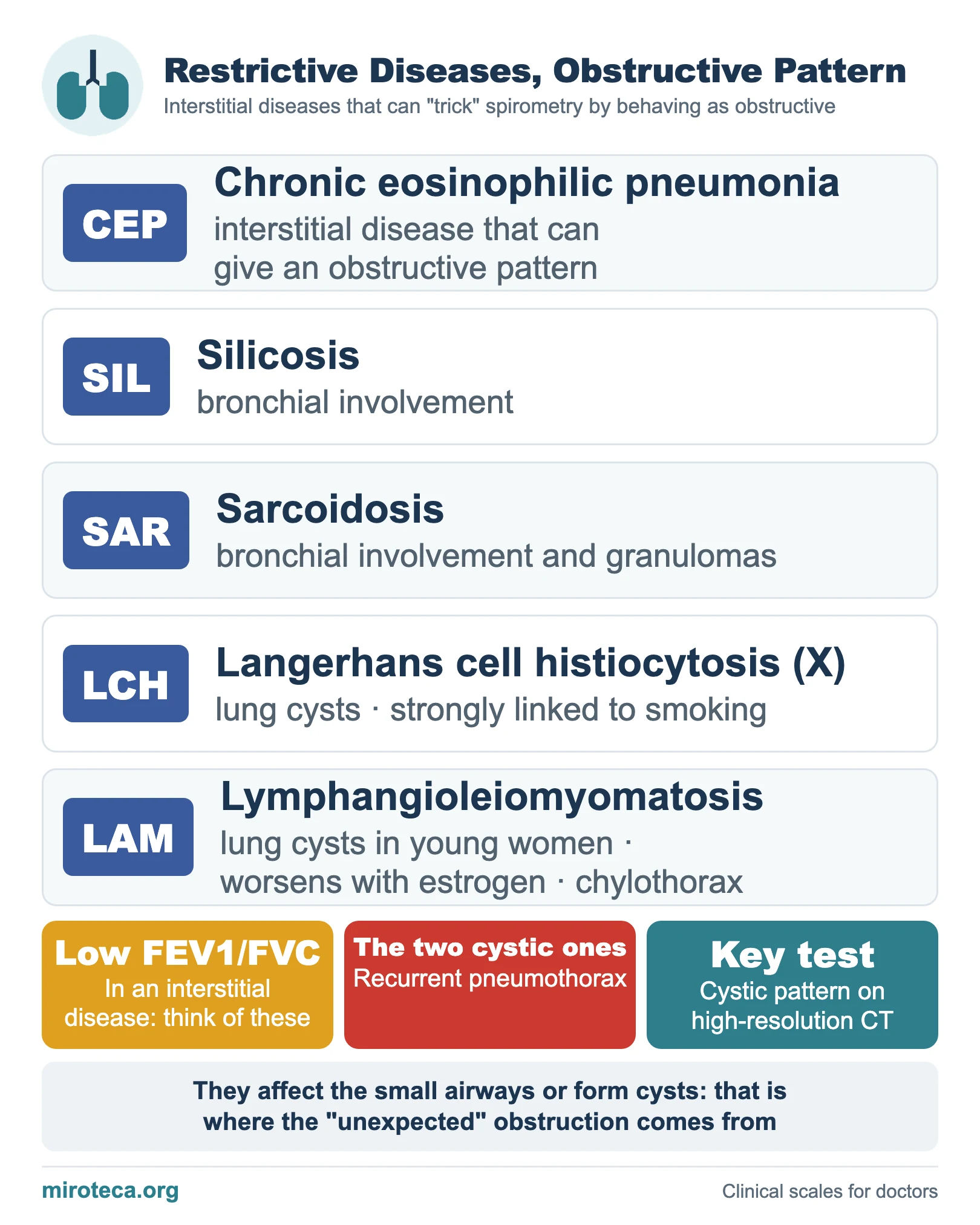
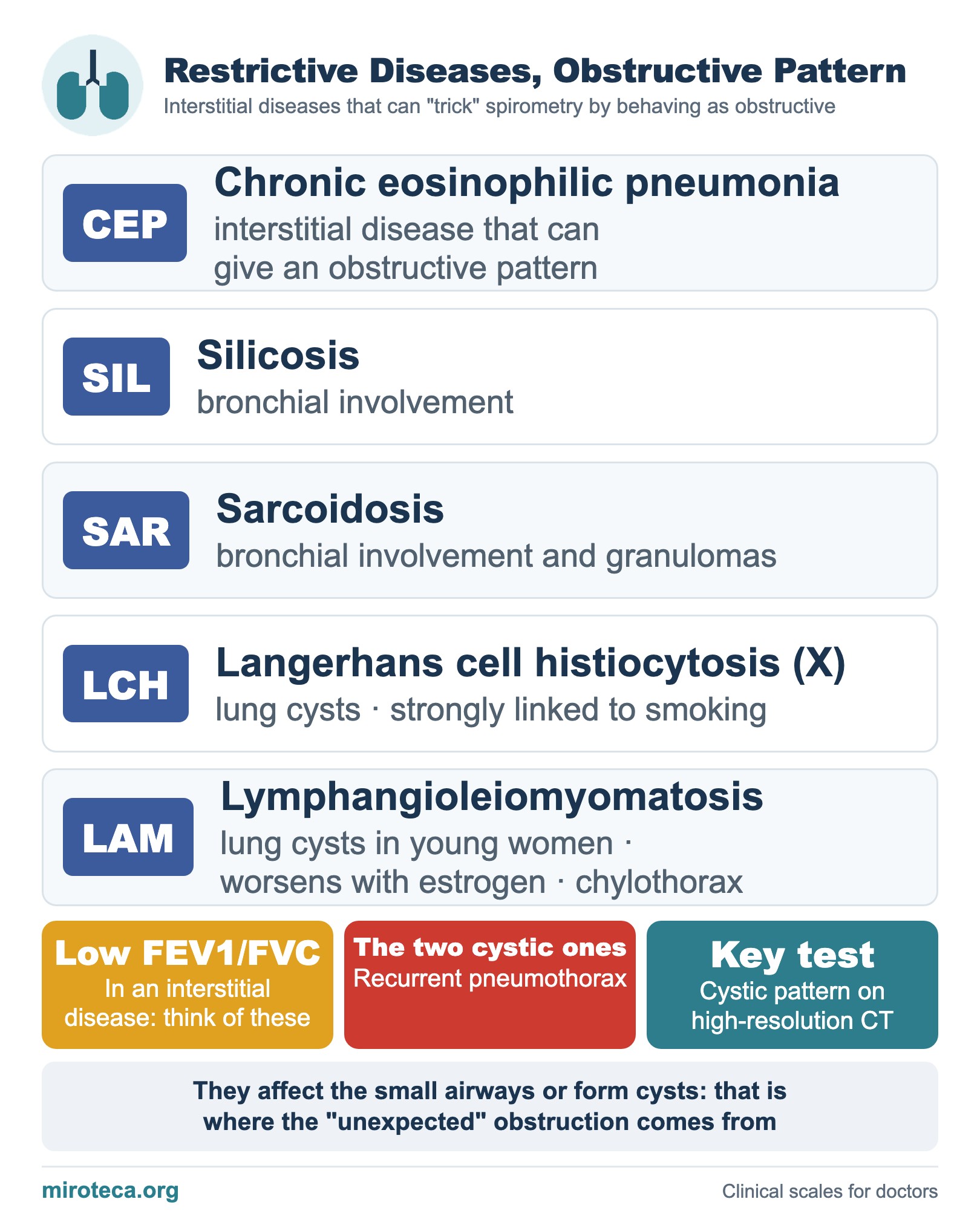
An interstitial lung disease usually gives a restrictive pattern. The catch with this group is that, because they affect the small airways or form cysts, they can behave as obstructive on spirometry.
The diseases in the group
Chronic eosinophilic pneumonia. Silicosis and sarcoidosis, through bronchial involvement and granulomas. Langerhans cell histiocytosis (histiocytosis X): cysts, strongly linked to smoking. Lymphangioleiomyomatosis: lung cysts in young women, worse with estrogen, and it can be associated with chylothorax.
Why it matters: if a case of interstitial disease shows a low FEV1/FVC ratio (obstruction), these conditions should not be ruled out. The two cystic ones (histiocytosis and lymphangioleiomyomatosis) are the ones that most often give obstruction and recurrent pneumothorax; the clue is the cystic pattern on high-resolution CT. See obstructive vs restrictive spirometry.
In exam questions
Short rules: interstitial disease with obstruction suggests this group; lymphangioleiomyomatosis means cysts in a young woman; histiocytosis X is linked to smoking.
Keep practicing
This page is the visual summary. To test yourself with real clinical reasoning, Medicinedle, a Wordle-inspired game, gives you one clinical case a day: guess the diagnosis in six tries, with a new clue after every miss. It is free.
Prefer quick questions? The clinical scores quiz gives you 5 case-based questions in about a minute, with the answer explained.