
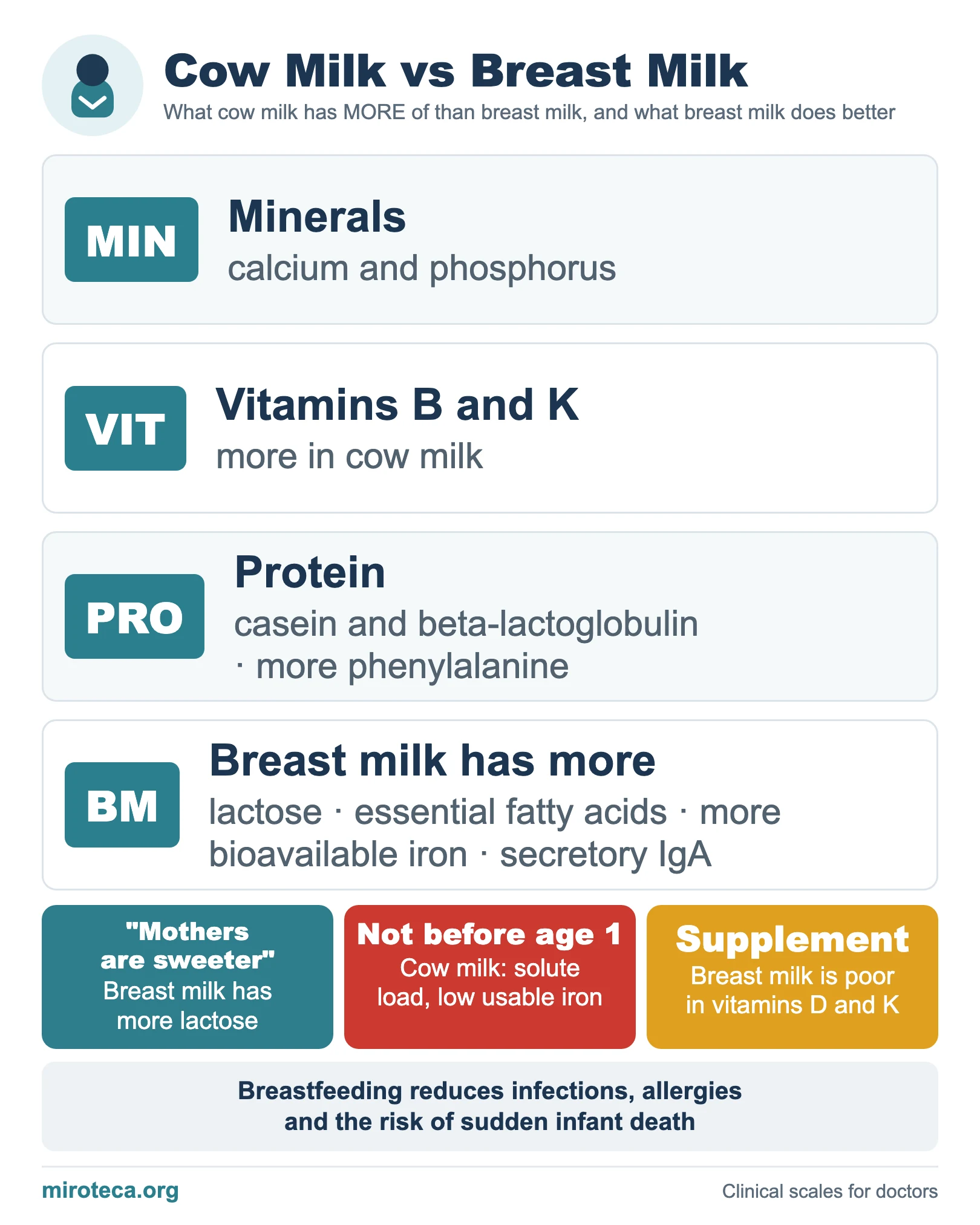
What the chart shows
Cow milk and breast milk differ in composition, and exam questions ask exactly those differences. The chart sums up what cow milk has in greater amounts; by exclusion, what breast milk has more of is the opposite.
What each milk provides
Cow milk (more): protein (casein and beta-lactoglobulin), minerals, calcium, phosphorus, B vitamins and vitamin K. Breast milk (more): lactose, essential fatty acids, more bioavailable iron and immunoglobulins (secretory IgA).
Practical consequences: breast milk is ideal for its defenses and digestibility, and cow milk is not recommended before the first year (its excess protein and solutes overload the kidney and its low iron favors anemia). Breastfeeding reduces infections, allergies and the risk of sudden infant death. Despite its advantages, breast milk is poor in vitamins D and K, which are supplemented in the newborn.
In exam questions
Short rules: breast milk has more lactose; cow milk has more protein and minerals but less usable iron; breast milk provides defenses (IgA) that cow milk does not.
Keep practicing
This page is the visual summary. To test yourself with real clinical reasoning, Medicinedle, a Wordle-inspired game, gives you one clinical case a day: guess the diagnosis in six tries, with a new clue after every miss. It is free.
Prefer quick questions? The clinical scores quiz gives you 5 case-based questions in about a minute, with the answer explained.