
What the chart shows
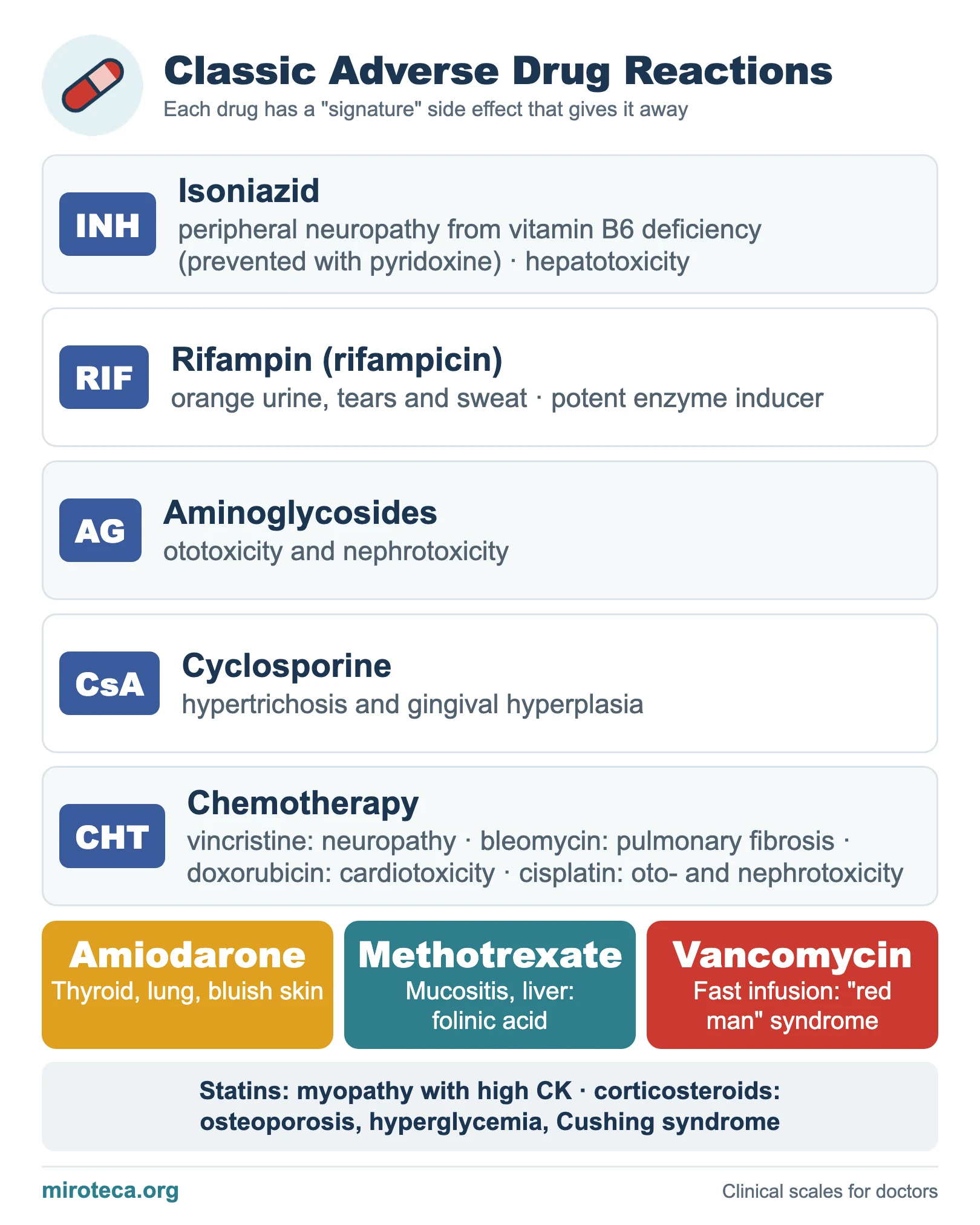
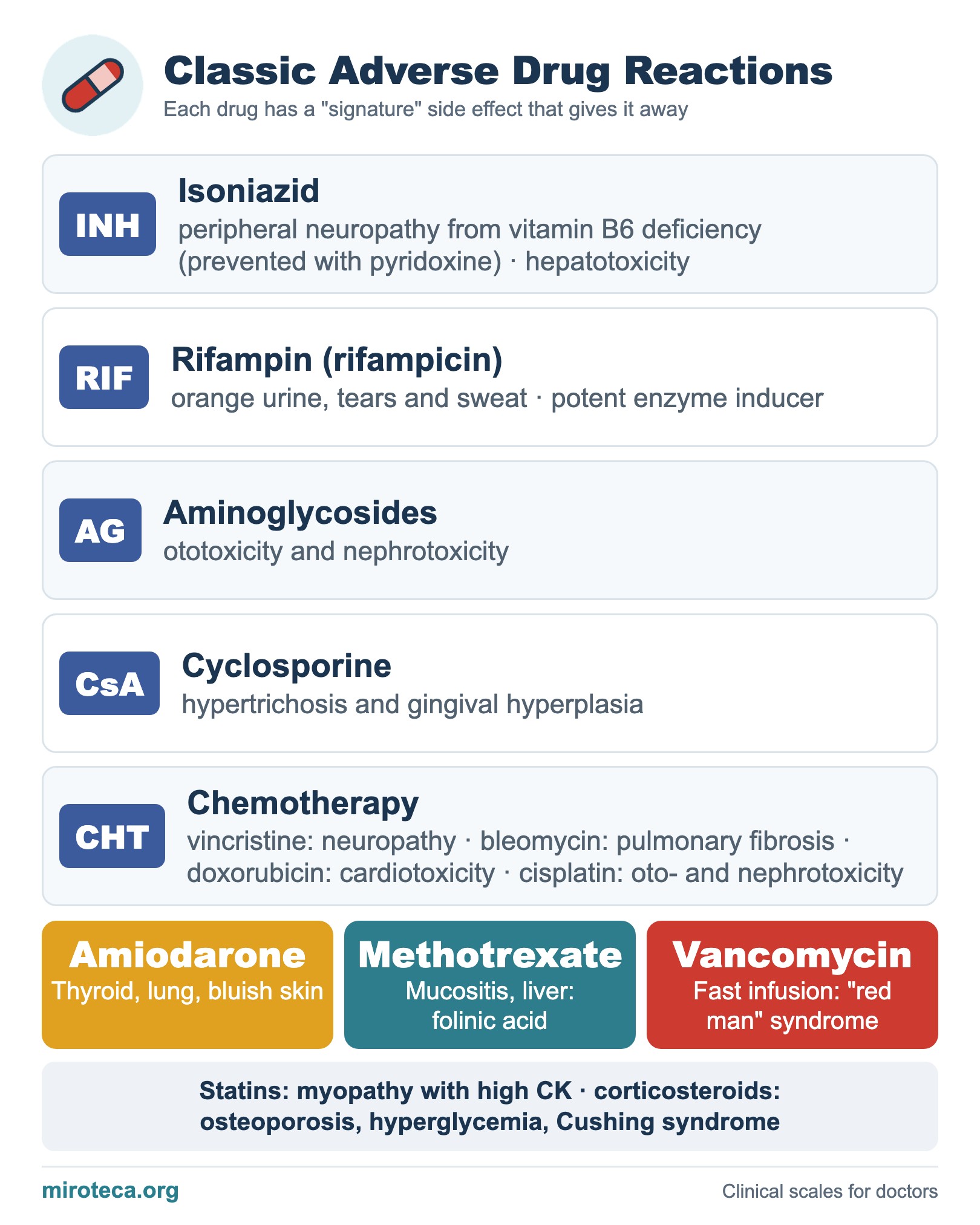
Each drug has an adverse reaction so characteristic that it gives the drug away. Learning them as "drug, effect" pairs is among the highest-yield study there is.
The classics to master
Isoniazid: peripheral neuropathy from vitamin B6 deficiency (prevented with pyridoxine), and hepatotoxicity. Rifampin (rifampicin): orange urine, tears and sweat, and it is a potent enzyme inducer. Aminoglycosides: ototoxicity and nephrotoxicity. Cyclosporine: hypertrichosis and gingival hyperplasia. Chemotherapy: vincristine, neuropathy; bleomycin, pulmonary fibrosis; doxorubicin, cardiotoxicity; cisplatin, ototoxicity and nephrotoxicity.
More pairs that come up often: amiodarone (thyroid, lung, bluish skin) and corticosteroids (osteoporosis, hyperglycemia, Cushing syndrome); methotrexate (mucositis and hepatotoxicity, prevented with folinic acid), statins (myopathy, with high CK) and vancomycin ("red man" syndrome if infused quickly).
In exam questions
The question usually describes the effect and asks for the culprit. The study trick is to link each drug to its target organ. Related: toxidromes and antidotes.
Keep practicing
This page is the visual summary. To test yourself with real clinical reasoning, Medicinedle, a Wordle-inspired game, gives you one clinical case a day: guess the diagnosis in six tries, with a new clue after every miss. It is free.
Prefer quick questions? The clinical scores quiz gives you 5 case-based questions in about a minute, with the answer explained.