
What the chart shows
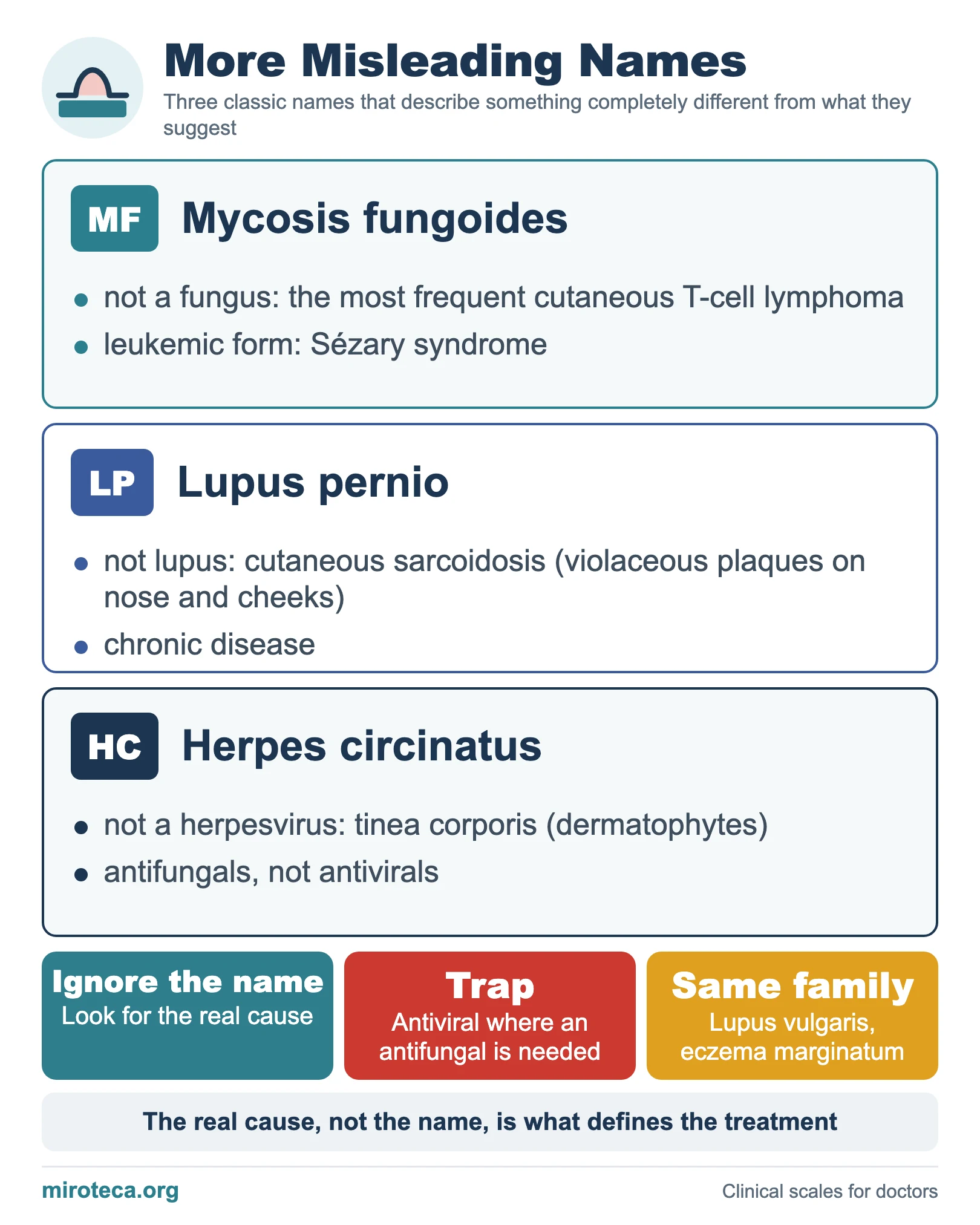
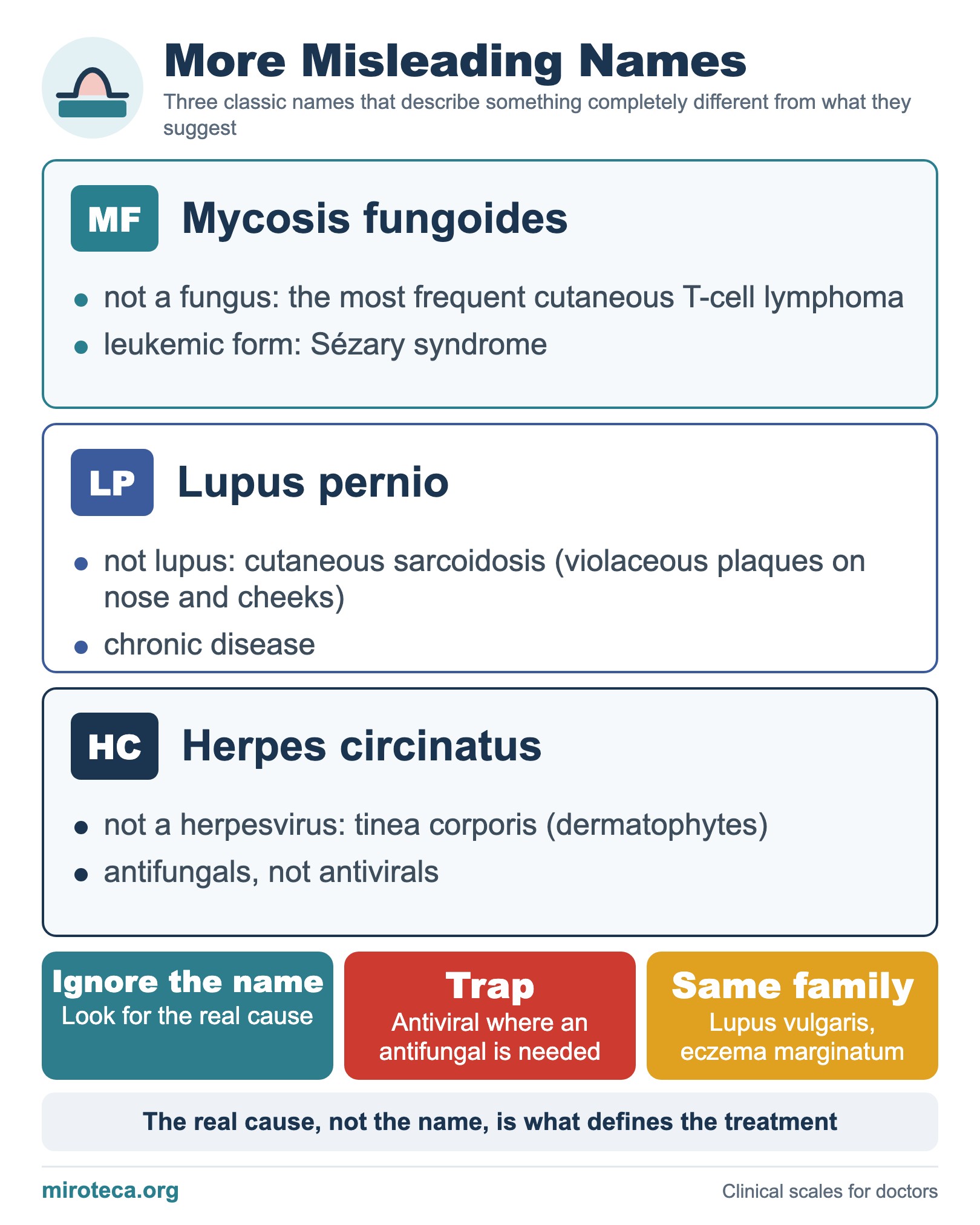
These are historical terms whose name describes something else. Questions use them as a trap: trusting the name leads to the wrong treatment (an antiviral where an antifungal is needed, for example).
The reality behind each name
Mycosis fungoides is not a fungus but a cutaneous T-cell lymphoma (the most frequent one); its leukemic form is Sézary syndrome. Lupus pernio is not lupus but cutaneous sarcoidosis (violaceous plaques on the nose and cheeks) that indicates chronic disease. Herpes circinatus is not a herpesvirus but tinea corporis (dermatophytes), treated with antifungals.
They fit with the other skin "false friends" in skin conditions with misleading names (eczema marginatum is tinea, dermatitis herpetiformis is celiac disease, lupus vulgaris is tuberculosis). The safe strategy is the same for all: ignore the name and look for the real cause, which is what defines the treatment.
In exam questions
Short rules: mycosis fungoides means cutaneous T-cell lymphoma; lupus pernio means cutaneous sarcoidosis; herpes circinatus means tinea (antifungals, not antivirals).
Keep practicing
This page is the visual summary. To test yourself with real clinical reasoning, Medicinedle, a Wordle-inspired game, gives you one clinical case a day: guess the diagnosis in six tries, with a new clue after every miss. It is free.
Prefer quick questions? The clinical scores quiz gives you 5 case-based questions in about a minute, with the answer explained.