
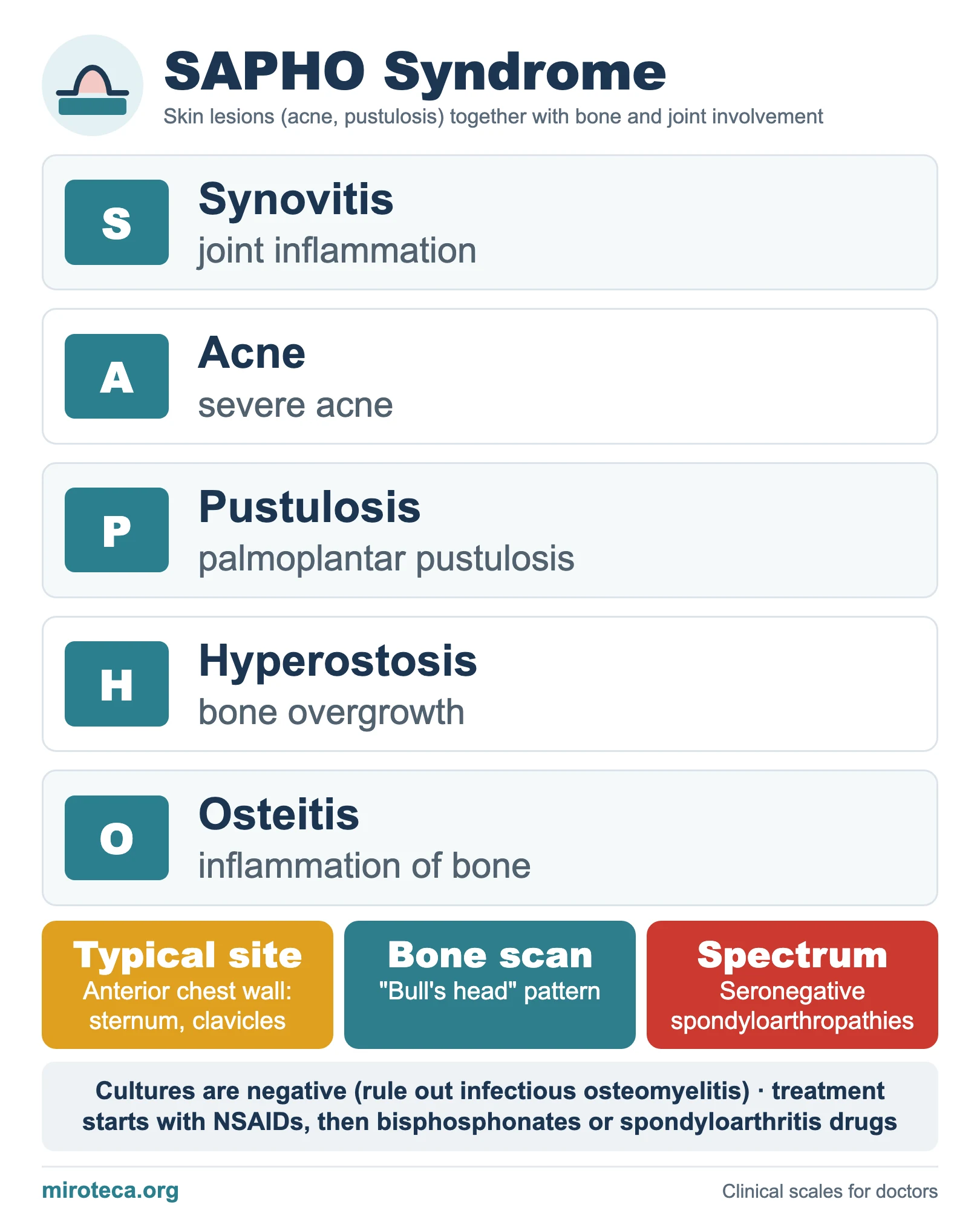
What the chart shows
SAPHO syndrome joins skin and bone: it combines skin lesions (severe acne, palmoplantar pustulosis) with inflammatory bone and joint involvement. When a question mixes both worlds, think of SAPHO.
Keys to recognize it
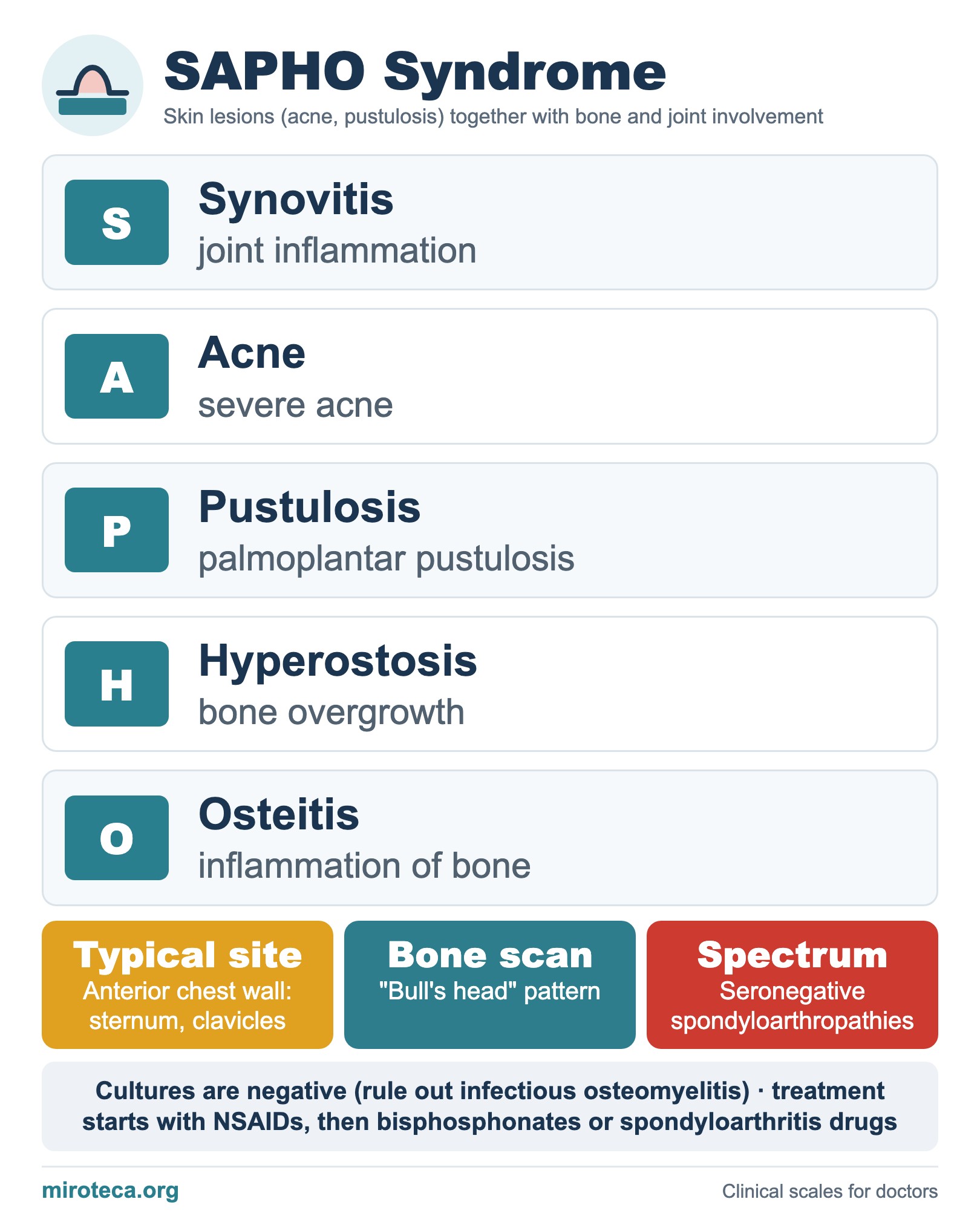
The acronym gathers its five components: Synovitis, Acne, Pustulosis (palmoplantar), Hyperostosis and Osteitis. The most typical site is the anterior chest wall (sternum, clavicles and sternocostal joints). It belongs to the spectrum of seronegative spondyloarthropathies, so it may involve the axial skeleton.
It is a clinical and radiological diagnosis (the bone scan shows a "bull's head" pattern in the chest wall), with negative rheumatoid factor. Treatment starts with NSAIDs and, depending on severity, bisphosphonates or spondyloarthritis drugs. Infectious osteomyelitis should be ruled out (here cultures are negative) and, in children, chronic recurrent multifocal osteomyelitis, considered the pediatric form of the same spectrum.
In exam questions
Short rules: skin (acne, pustulosis) plus bone (osteitis, hyperostosis) means SAPHO; it typically affects the anterior chest wall.
Keep practicing
This page is the visual summary. To test yourself with real clinical reasoning, Medicinedle, a Wordle-inspired game, gives you one clinical case a day: guess the diagnosis in six tries, with a new clue after every miss. It is free.
Prefer quick questions? The clinical scores quiz gives you 5 case-based questions in about a minute, with the answer explained.