
What the chart shows
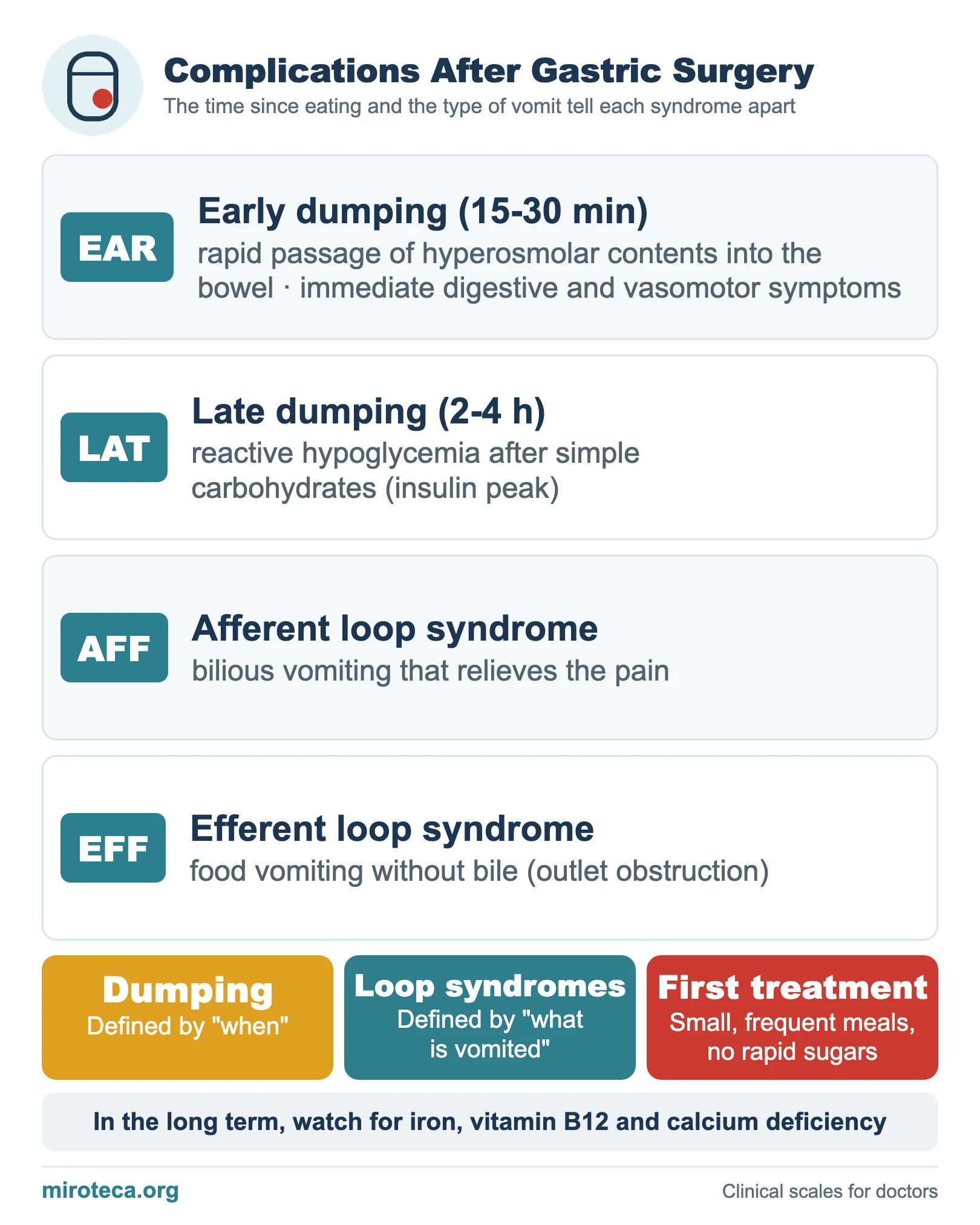
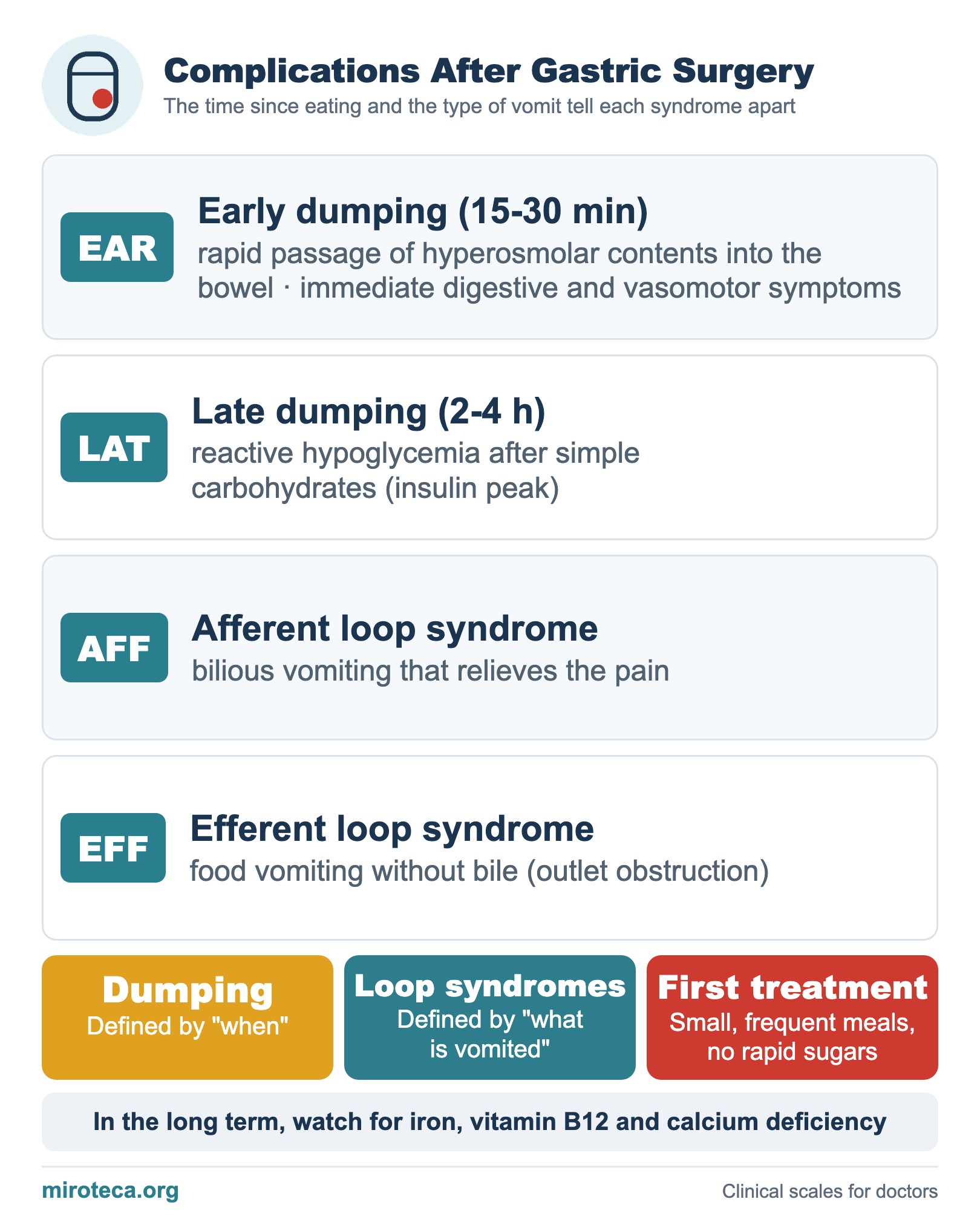
After gastric surgery, characteristic syndromes appear whose timing and type of symptom identify them. Dumping is defined by when, and the loop syndromes by what the patient vomits.
Clues and management
Early dumping (15-30 minutes): rapid passage of hyperosmolar contents into the bowel, with digestive and vasomotor symptoms (sweating, tachycardia, dizziness). Late dumping (2-4 hours): reactive hypoglycemia from an insulin peak after rapid sugars. Afferent loop: bilious vomiting that relieves the pain. Efferent loop: food vomiting without bile from outlet obstruction.
Treatment of dumping starts with diet: small, frequent meals, separating liquids from solids and avoiding rapidly absorbed sugars. In the long term, iron, vitamin B12 and calcium deficiency should be monitored.
In exam questions
Short rules: early dumping is osmotic and vasomotor, late dumping is hypoglycemia; bilious vomiting that brings relief means afferent loop.
Keep practicing
This page is the visual summary. To test yourself with real clinical reasoning, Medicinedle, a Wordle-inspired game, gives you one clinical case a day: guess the diagnosis in six tries, with a new clue after every miss. It is free.
Prefer quick questions? The clinical scores quiz gives you 5 case-based questions in about a minute, with the answer explained.