What the chart shows
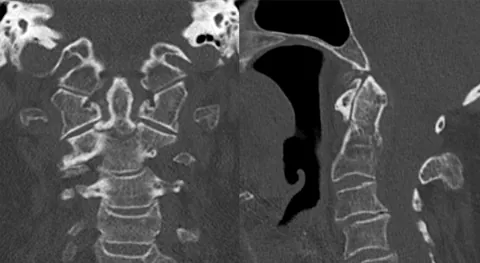
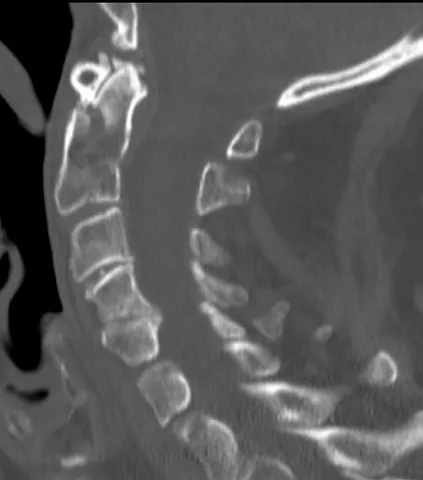
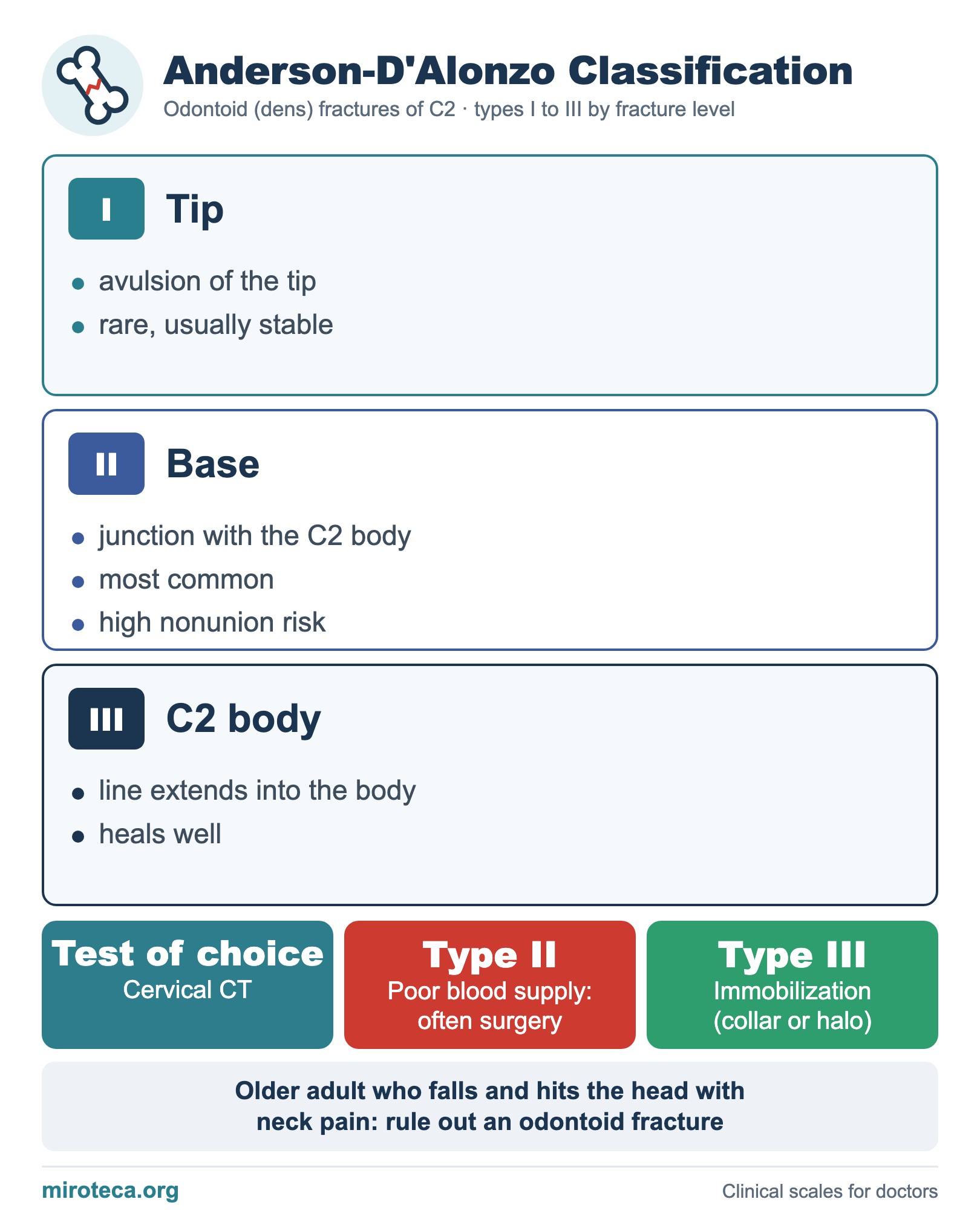
The Anderson-D'Alonzo classification (1974) describes fractures of the odontoid process (dens) of the axis, C2, by the level of the fracture line. These fractures occur in young patients after high-energy trauma and, increasingly, in older adults after a ground-level fall.
The detail that settles it
Type I is an avulsion of the tip; type II crosses the base of the dens at its junction with the C2 body; type III extends into the body of C2. Type II is the most common and has a high nonunion risk because of poor blood supply and a small contact area, so it is often treated surgically, especially when displaced or in older patients. Type III, through cancellous bone, usually heals with immobilization.
In exam questions
An older adult who falls and hits the head with upper neck pain needs CT to rule out an odontoid fracture, even with a normal neurologic exam. The hangman fracture is a different C2 injury, through the pars interarticularis.
Keep practicing
This page is the visual summary. To test yourself with real clinical reasoning, Medicinedle, a Wordle-inspired game, gives you one clinical case a day: guess the diagnosis in six tries, with a new clue after every miss. It is free.
Prefer quick questions? The clinical scores quiz gives you 5 case-based questions in about a minute, with the answer explained.