What the chart shows
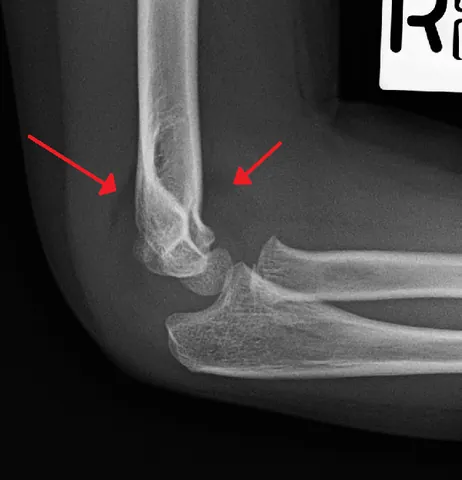
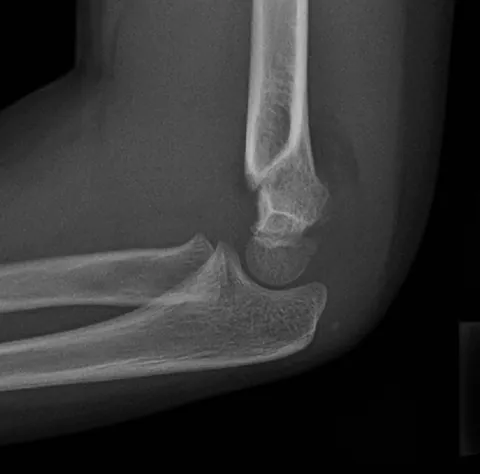
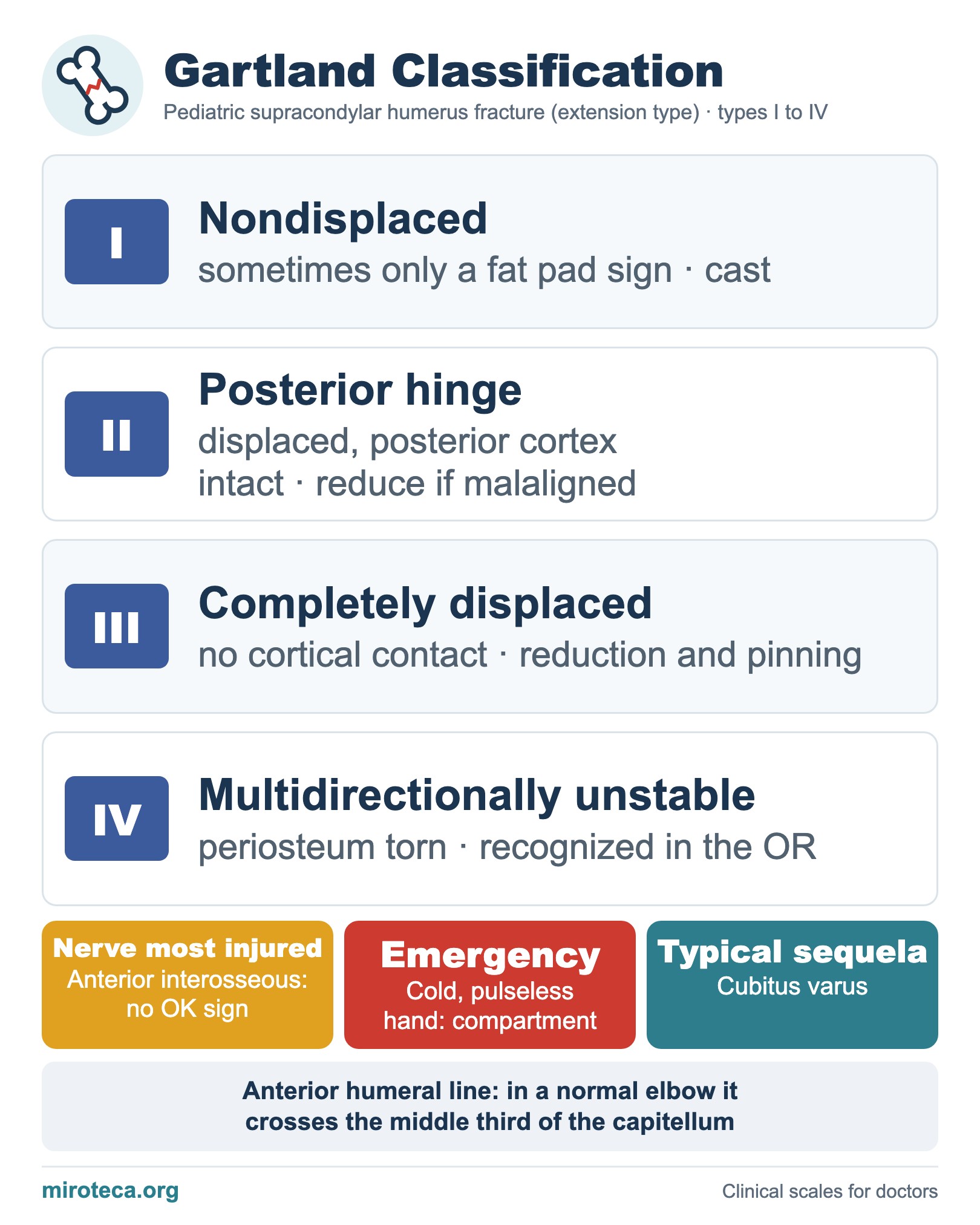
The Gartland classification grades supracondylar humerus fractures in children, the most common pediatric elbow fracture, mainly the extension type after a fall on an outstretched hand. Leitch added type IV in 2006: unstable in both flexion and extension.
The detail that settles it
Type I is nondisplaced, type II is displaced with an intact posterior cortex (hinged), type III is completely displaced and type IV is multidirectionally unstable. On the lateral view, the anterior humeral line should cross the middle third of the capitellum; if it passes anterior to it, the fracture is displaced in extension.
In exam questions
The anterior interosseous nerve is the nerve most often injured in extension-type fractures (the child cannot make an OK sign). A cold, pulseless hand or pain with passive finger extension suggests vascular injury or compartment syndrome (Volkmann contracture). The classic late deformity is cubitus varus.
Keep practicing
This page is the visual summary. To test yourself with real clinical reasoning, Medicinedle, a Wordle-inspired game, gives you one clinical case a day: guess the diagnosis in six tries, with a new clue after every miss. It is free.
Prefer quick questions? The clinical scores quiz gives you 5 case-based questions in about a minute, with the answer explained.